


ALG Worldwide Logistics
ALG Worldwide Logistics: a branded freight portal with real-time carrier updates, an account for every customer, clear reports and less manual work.

ALG Worldwide Logistics: From Carrier Integration to a Secure, Branded Freight Portal
A Benmore Technologies case study, in partnership with ALG Worldwide Logistics.
1. Introduction
Overview:
ALG Worldwide Logistics is a Chicago-based freight brokerage. Its portal is where customers book and track orders, carriers register and bid on loads, and ALG's staff manage quotes, deliveries and reports.
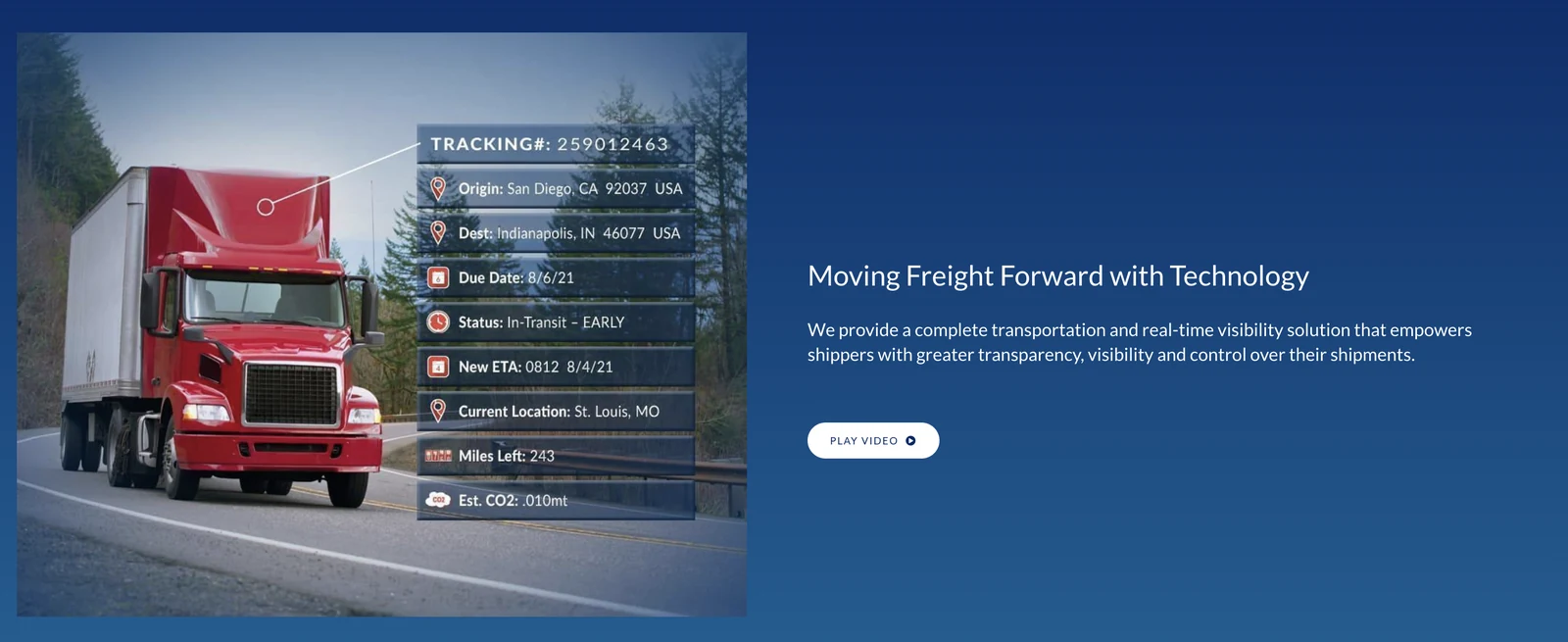
Benmore first connected the portal to ALG's delivery carrier, so status updates and proof-of-delivery photos arrive on their own instead of through phone calls and emails. That integration processed more than 20,000 orders in its first two months.
In the latest phase the portal grew with ALG's business: an account for every customer, one clear set of order statuses and reports, ALG's brand on every page and email, and tools that take manual work off ALG's team: a spreadsheet importer, manual proof of delivery, once-only bookings and support for multiple shipping customers.
At a glance:
| Orders in the first two months | 20,000+ |
| Delivery confirmations with photos | 100% |
| Order statuses | Six, the same on every screen and report |
| Customer spreadsheet import | All 52 weekly tabs at once |
| Order lookups | 8x faster (tested on 60,000 orders) |
| Screen sizes tested | 40, desktop and mobile |
Challenge:
- An account for every customer: as more shipping customers joined, each needed their own orders, delivery photos, signatures, reports and labels.
- One version of the truth: every screen and report should describe an order the same way.
- Look and sound like ALG: every page and email should carry ALG's brand, and every lead should reach the right person.
- Take manual work off the team: one customer plans its orders in a spreadsheet with 52 weekly tabs, and some deliveries have to be confirmed by hand.
2. The Problem
Background:
Freight brokers depend on knowing where every shipment is, right now. The first version of the portal solved that: updates and delivery photos came in from the carrier automatically. As more customers, carriers and staff came to rely on the portal every day, the priorities shifted to privacy, accuracy, brand and saving the team time.
Pain Points:
- Before the integration: status updates meant checking in with the carrier by hand, and delivery confirmations were handled manually.
- A growing customer base: each new shipping customer needed their own account, labels and reports.
- A refreshed brand: ALG's new logos and contact details needed to reach every page and email.
- Manual spreadsheet work: a customer's 52-week order plan had to be brought into the portal.
- Bookings at scale: every shipment booked exactly once, with labels in each customer's own company name.
3. Our Solution
Discovery Process:
The first phase started with meetings between ALG's team, the carrier and Benmore to map how orders and deliveries actually flow. For the latest phase we worked through the whole portal with ALG's team: who can see what, whether the numbers are right, how it looks, and where staff were still doing things by hand.
What we built:
- Carrier integration (first phase):
- Status updates arrive from the carrier automatically, in real time.
- Proof-of-delivery photos and documents attach to each order.
- Monitoring and alerts catch problems early as order volumes grow.
- Customer accounts and security:
- Each customer has their own account for orders, delivery photos, signatures, reports, saved reports, API access and the load board. ALG's staff see everything.
- Internal screens are for staff, and links sent to carriers expire.
- Every carrier update is verified and stored, so it can be replayed if anything goes wrong.
- Exported spreadsheets are safe to open.
- Proof-of-delivery photos are kept permanently, and deleted photos are gone for good.
- Clear statuses and reports:
- One set of six statuses, in the same order everywhere. Any unfamiliar carrier status shows as "In Transit", so every order stays visible.
- Reports include every order and the full last day, even when the clocks change.
- Reports show only real timestamps.
- ALG branding and communications:
- New ALG logos, contact details, footers, error pages and admin screens.
- Password reset, quote, carrier onboarding, request-for-quote and auction emails share one branded layout.
- The "Talk to an Expert" form reaches the right person from every page.
- Carrier terms now name ALG, carrier registration was rebuilt, and an accessibility audit was completed.
- Spreadsheet importer:
- Staff upload a customer's order spreadsheet, preview it and publish all 52 weekly tabs at once.
- Uploading the same sheet again is safe, and an order's status can only move forward.
- Notes in the sheet carry over, and an ops guide with a "what goes where" table shows the team how it works.
- Manual proof of delivery:
- When a delivery needs confirming by hand, staff record the recipient's signature, the time, notes and photos.
- The portal records which staff member entered it, visible to staff only.
- Bookings:
- A booking record makes sure every shipment is booked exactly once.
- Only staff can book, and problems with an uploaded file show up right on the form.
- The booking service now sits with the rest of the portal and is covered by 28 automated tests.
- Multiple customers:
- Labels and bookings show the customer's own company name as the sender.
- Orders land directly in the booked customer's account, and every account has a company name.
- Carriers, quotes and bidding: bidding, quotes, carrier lists and imports were reviewed and strengthened.
- Speed and upkeep:
- Order lookups are 8x faster, tested on 60,000 orders.
- Addresses already looked up are remembered, so they aren't looked up again.
- Pages load everything from the portal itself.
- Dashboards, status badges, page navigation, reports, order details and label printing were polished, and old pages retired.
Technology Stack:
- Backend and interface: Django
- Hosting: DigitalOcean
- Carrier connection: real-time updates from the carrier's API, verified and stored
4. Implementation
First phase: the carrier integration
- Worked directly with the carrier's development team to set up a secure connection.
- Tested end to end with real order data, then rolled out gradually with monitoring in place.
Latest phase: privacy, accuracy and new tools
- The spreadsheet importer shipped with an ops guide, so ALG's team could use it from day one.
- Every change was measured first. For example, downloads were confirmed to fetch only the photos they need.
Testing:
- Automated tests, including 28 for the booking service.
- Visual checks of the portal on 40 desktop and mobile screen sizes.
- Two full rounds of edge-case testing.
5. Results
Product Outcomes:
- 20,000+ orders processed in the first two months, with photo confirmation on every delivery.
- Support for multiple shipping customers, each with their own account and labels.
- Six clear order statuses, the same on every screen and report.
- ALG's brand on every page and email.
- A 52-week customer spreadsheet imports in one step.
- Order lookups 8x faster.
Business Impact:
- Ready to grow: every new customer gets their own account, labels and bookings from day one.
- Numbers people can rely on: every screen and report tells the same story.
- Less manual work: spreadsheet imports, proof of delivery in the portal, and every shipment booked exactly once.
- A portal that feels like ALG: consistent branding, and leads that reach the right person.
6. Lessons Learned
- Build for the next customer. Designing accounts, labels and reports per customer makes adding the next one easy.
- One status list, one meaning. Six clear statuses, and anything unfamiliar lands somewhere visible.
- Keep the originals. Storing every carrier update means any moment can be replayed exactly, not guessed at.
- Measure before you change. Checking first keeps the work on what matters.
- Collaboration is critical. Broker, carrier and development teams working together made the integration succeed.
7. Conclusion
ALG's portal started as a carrier integration that gave ALG real-time visibility into every delivery. It has grown into a branded freight portal for many customers, with clear statuses, reliable reports and tools that take manual work off ALG's team, from spreadsheet imports to proof of delivery.